
Glute-focused training starts with a clear goal: more strength, more muscle, better exercise skill, or a combination. A useful programme gives you a few movements you can repeat, a way to progress them and time to recover.
At Tempo, this goal fits within one-to-one personal training in Fitzrovia. The programme also keeps room for your upper body and wider fitness. You do not need a different exercise every session to make the plan useful.
One-to-one coaching · Fitzrovia
Build a repeatable glute-training plan
For adults who want stronger glutes, more muscle or better control of the main lifts.
Work with Julian on exercise choice, technique, progression and a weekly workload that you can recover from.
Start with a conversation about your goal, training history and available days. Confirm current session options and costs before agreeing a plan.
Choose exercises for the job
Squats, split squats, hip hinges, bridges and hip thrusts offer different ways to load the hips. The best starting choices are movements you can perform with control, through a suitable range, using the equipment available to you.
In a nine-week trial of untrained college-aged adults, hip thrusts and back squats produced similar gluteal growth, while squats produced more thigh growth. That result supports having options; it does not identify one exercise that is best for every person. Read the trial by Plotkin and colleagues.
- Squat or split squat: practise coordinated hip and knee movement.
- Hip hinge: learn to control the load through the hips, with a Romanian deadlift as one possible choice.
- Bridge or hip thrust: use a separate hip-extension exercise when it fits your goal and equipment.
- Optional hip-abduction work: add a small accessory exercise when useful, rather than replacing the main movements.
A two-session starting example
This is an educational example for a healthy adult who can use these movements comfortably. It is not a required programme or a rehabilitation plan. A coach should adjust the exercises, starting load and amount of work to your experience.
Session A: squat and bridge pattern
- Squat variation: 2 working sets of 8–12 controlled repetitions.
- Hip thrust or bridge: 2 working sets of 8–12 repetitions.
- Upper-body pull and push: choose a manageable exercise for each.
Session B: hinge and single-leg pattern
- Romanian deadlift or an easier hinge variation: 2 working sets of 8–10 repetitions.
- Supported split squat or step-up: 2 working sets of 8–10 repetitions per side.
- Upper-body pull and push: complete the full-body session.
Start with a few easy minutes of movement and lighter practice sets. Choose working loads that leave roughly two or three good repetitions available. Rest long enough to repeat the movement well; around two minutes is a practical starting point for these lifts. These numbers are draft coaching examples, not the exact protocol tested in the trial above.
Fit the work into two, three or four training days
These examples count total planned training days. Keep a day between the two main lower-body sessions where possible. ACSM's 2026 guidance supports consistent resistance training across the major muscle groups; it also stresses that programme design should fit the person. Read the ACSM guidance.
Two days: a clear full-body base
Tuesday: Session A. Friday: Session B. Keep the rest of the week flexible for everyday activity and recovery.
Three days: add fitness without doubling the leg work
Monday: Session A. Wednesday: manageable cardio and optional upper-body practice. Friday: Session B. The third day should support the week rather than leave your legs too tired for Friday.
Four days: separate lower and upper body
Monday: lower-body exercises from A. Tuesday: upper body. Thursday: lower-body exercises from B. Saturday: upper body with optional easy cardio. More days spread the work out; they do not automatically mean more glute work.
Use a progression rule you can check
- Learn: choose a repeatable starting load and record repetitions, range and control.
- Build: add a repetition within your chosen range when the same load feels manageable.
- Increase: once you reach the top of the range on both sets with the intended effort and technique, try the smallest useful load increase. Return to the lower end of the range.
- Review: if performance or recovery declines across sessions, hold the load or reduce some work. Do not add sets simply because the calendar says to.
Use the first few weeks to establish reliable technique and a baseline. Review the next block against your records. An easier week is an option when needed, not a compulsory reset every fourth week. See how often to strength train and rest between sets.
Illustrative coaching example · based on Julian’s approach
When the next leg session comes too soon
Imagine a trainee whose second lower-body session repeatedly goes worse than the first: the usual load feels harder and technique becomes less consistent. The useful response is to review the workload, spacing, sleep and other activity before adding another hard session.
A coach might remove an accessory set, reduce how close sets come to failure, or move the next demanding session. The decision is checked against performance and recovery, rather than soreness alone. This is a planning example, not a documented client result.
A gap as long as 14 days may occur in an individual plan, but it is not the usual starting point for building glutes. If this much recovery is repeatedly needed, review the session demands and the wider context. ACSM’s general guidance for healthy adults favours training the major muscle groups at least twice weekly, with an appropriate individual dose. Read the guidance.
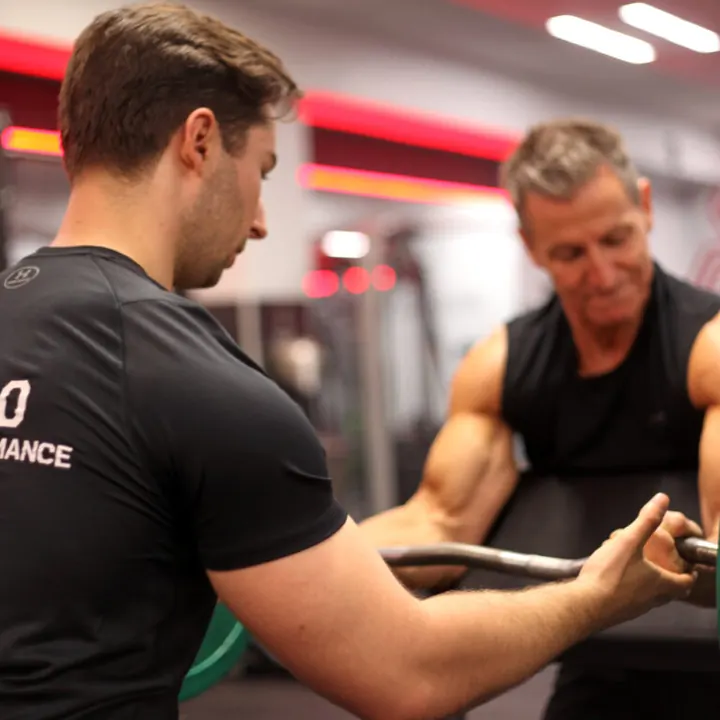
The Tempo approach
Define the goal, establish a starting point, coach the work and review what changes. Julian’s six-stage coaching method explains the decisions behind the programme.
Read the client muscle-building example. It is a separate client account, not the illustrative scenario on this page.
Warm up, recover and measure the right things
A short warm-up should help you practise the movements ahead. Band drills can be an option, but feeling a strong burn is not a progress measure. Use stretching or mobility work for a useful movement goal, not as a compulsory glute-growth ritual.
Track loads, repetitions, exercise quality and attendance. If your goal includes muscle size, agree how you want to review it; photographs and body measurements are optional. Read our protein guide and a real muscle-building case, with the limits of any individual result. That case is not presented as a glute-specific transformation.
Use this at your next review
Your progression notes
Use the same exercise setup so that each review compares like with like.
- Exercise, load and repetitions: what did you repeat well?
- Effort: approximately how many controlled repetitions remained?
- Next-session performance: repeat, add a repetition or make the work easier?
- Recovery: did the previous session fit the rest of the week?
Keep these notes for your own planning. Nothing here needs to be submitted online.
Glute-focused personal training in Fitzrovia
Work directly with Julian at 1 Cavendish Mews North, Fitzrovia, London W1W 6LA. Discuss your experience, available days and whether strength, muscle development or both matter most to you. The first decision is a starting point you can repeat.
Visits are by appointment at 1 Cavendish Mews North, with the entrance off Hallam Street. See contact and arrival information before your first visit.