
Training Over 40

Training Over 40: What Actually Changes in London

Getting older doesn’t mean getting weaker. But it does mean training smarter.

If you’re over 40 and living or working in London — whether you’re a professional in Fitzrovia, a Marylebone resident, or commuting through Great Portland Street every day — your body is changing in ways that your training needs to account for. Not dramatically. Not catastrophically. But meaningfully enough that ignoring those changes is the fastest route to injury, frustration, and plateau.

This guide covers exactly what changes after 40, what that means for how you should train, and how busy London professionals over 40 can build a level of fitness that is genuinely better than it was in their 30s.

What Actually Happens to Your Body After 40?

The changes that happen after 40 are real — but they are not as dramatic or as inevitable as most people think. Understanding what’s actually happening is the first step to training around it effectively.

Does Muscle Mass Really Decrease After 40?

Yes — but only if you let it.

The scientific term is sarcopenia — the gradual loss of muscle mass that begins in your 30s and accelerates after 40. Without resistance training, adults lose between 3–8% of their muscle mass per decade after 30. After 60, that rate increases further.

The consequences of unchecked sarcopenia are significant — a slower metabolism, reduced strength, poorer balance and coordination, higher injury risk, and a declining quality of life.

The good news is that sarcopenia is almost entirely preventable — and largely reversible — with consistent strength training. The research is unambiguous on this point. Adults in their 40s, 50s, and 60s who engage in regular progressive resistance training maintain and build muscle mass at rates comparable to people decades younger.

This is why strength training is not optional after 40. It is essential.

How Does Training Change After 40?

The fundamentals of training do not change after 40. Progressive overload still drives muscle growth. A calorie deficit still produces fat loss. Consistency still beats intensity every time.

What changes is the context around the training — specifically recovery, hormones, and the cost of poor technique.

Does Recovery Take Longer After 40?

Yes — and this is the most practically significant change for most people over 40.

In your 20s and early 30s, you could train hard six days a week, sleep five hours, eat poorly, and still make progress. After 40, that approach produces injury and exhaustion rather than results.

Recovery capacity decreases after 40 for several reasons. Testosterone and growth hormone — both critical for muscle repair and recovery — decline with age. Inflammation takes longer to resolve after hard training. Sleep quality often deteriorates, further compromising recovery.

The practical implication is straightforward — training over 40 requires more recovery between sessions, not less training overall. Three well-structured sessions per week with adequate recovery between them produces better results than five poorly recovered sessions.

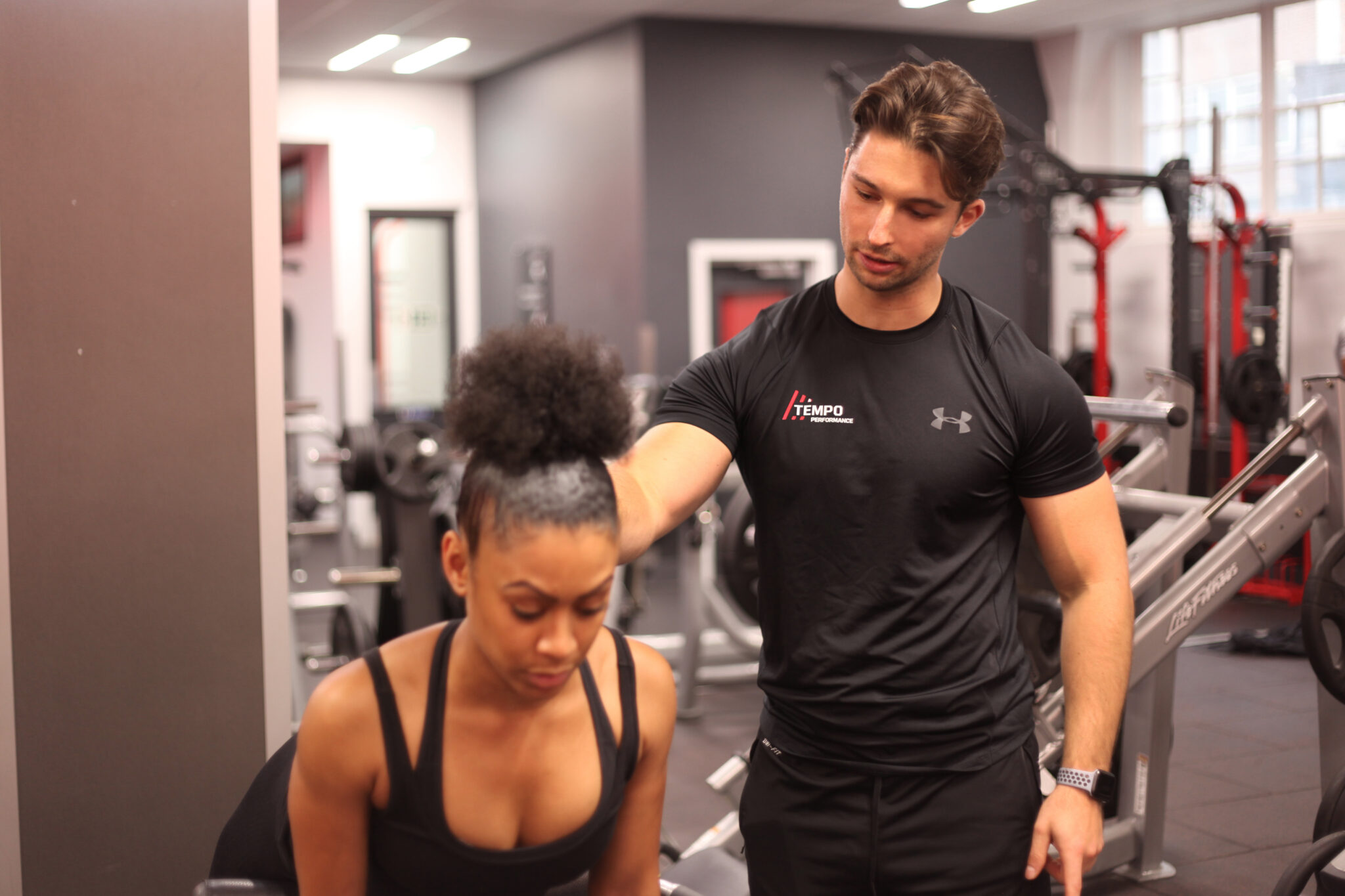
At Tempo Performance PT in Fitzrovia, Julian Ernst programmes training over 40 with recovery built into the structure from day one. Session frequency, volume, and intensity are all calibrated to the individual’s recovery capacity — not a generic template.

Does Testosterone Decline Affect Training After 40?

For men, testosterone begins declining at roughly 1% per year from the mid-30s onwards. By 45, many men have testosterone levels 15–20% lower than they did at 25. This affects muscle building capacity, recovery speed, fat distribution, and energy levels.

For women, the approach of perimenopause and menopause brings significant hormonal shifts — declining oestrogen and progesterone affect body composition, bone density, fat storage patterns, and recovery.

These hormonal changes are real. But they do not make getting fit impossible after 40. They make the right kind of training more important — not less achievable.

The right kind of training after 40 is progressive resistance training combined with adequate protein intake and proper sleep. Every other variable matters less than those three.

What Is the Best Exercise for Over 40s in London?

The best exercise for over 40s is strength training — specifically compound resistance training built around the fundamental movement patterns.

This answer surprises a lot of people who expect the answer to be something gentler — yoga, swimming, or walking. Those all have value. But nothing produces the combination of muscle preservation, metabolic benefit, bone density improvement, and functional strength that progressive resistance training delivers.

Is It Safe to Lift Heavy Weights After 40?

Yes — with appropriate technique and progressive programming.

The fear that heavy lifting is dangerous after 40 is one of the most persistent and damaging myths in fitness. The evidence shows the opposite. Heavy compound lifting — squats, deadlifts, presses, and rows — performed with correct technique and appropriately progressive loading is one of the safest and most effective forms of exercise for adults over 40.

The key qualifiers are technique and progression. Lifting heavy with poor technique is risky at any age. Lifting heavy with excellent technique, taught and supervised by a qualified personal trainer in London, is not only safe but actively protective — building the joint stability, bone density, and muscular strength that reduces injury risk in everyday life.

At Tempo Performance PT in Fitzrovia, every client over 40 starts with a movement assessment. Technique is established before load is added. Progressive overload is built gradually — never rushed. The result is strength gains that are both impressive and sustainable.

Training Over 40 for Busy London Professionals

One of the most common challenges Julian Ernst hears from clients over 40 in London is not motivation — it’s time. Long working hours, family commitments, and the relentless pace of life in Central London leave little room for training.

The answer is not to train more. It is to train smarter.

Three 45-minute sessions per week — properly programmed, consistently executed — produce better results for most people over 40 than five or six longer, less focused sessions. The private studio environment at Tempo Performance on Hallam Street, Fitzrovia, means every minute of every session is used effectively. No waiting for equipment, no distractions, no wasted time.

How Many Times Per Week Should You Train After 40?

Three sessions per week is the optimal training frequency for most people over 40 — particularly those with demanding professional lives.

Three sessions allows sufficient training stimulus to drive muscle growth and fat loss while providing adequate recovery between sessions. It is sustainable as a long-term habit in a way that higher frequencies often are not.

Two sessions per week produces results — slower, but consistent and injury-free. This can be a sensible starting point for someone returning to training after a long break.

Four sessions per week is appropriate for some people over 40 — but only with sufficient recovery between sessions, adequate sleep, and solid nutritional support.

Fat Loss After 40 — Why It Gets Harder and How to Fix It

Fat loss after 40 is more challenging than in your 20s and 30s. That’s a fact — not an excuse.

The reasons are hormonal and metabolic. Declining testosterone in men promotes fat storage and reduces muscle-building capacity. Declining oestrogen in women shifts fat distribution — particularly increasing abdominal fat storage. A slower metabolism — compounded by muscle loss from sedentary behaviour — means the calorie deficit required for fat loss needs to be managed more carefully.

Why Is Belly Fat Harder to Lose After 40?

The increase in abdominal fat after 40 — particularly visceral fat stored around the organs — is driven primarily by hormonal changes and elevated cortisol.

Cortisol — the stress hormone — promotes visceral fat storage. London professionals over 40 are often running at chronically elevated cortisol levels — long working hours, poor sleep, financial pressure, family demands. This makes abdominal fat loss particularly resistant to standard approaches.

The solution is not to diet harder. It is to address the full picture — training, nutrition, sleep, and stress management together. This is exactly the approach Julian Ernst takes with clients over 40 at Tempo Performance PT in Fitzrovia.

Nutrition After 40 — What Changes

Protein becomes more important after 40 — not less. Muscle protein synthesis — the process by which the body builds and repairs muscle tissue — becomes less efficient with age. Older adults need more dietary protein to achieve the same muscle-building stimulus as younger people.

The current evidence suggests adults over 40 should aim for 1.8–2.2g of protein per kg of bodyweight per day — significantly higher than the general adult recommendation of 0.8g/kg.

For a 75kg person over 40, that means 135–165g of protein per day. Achieving this consistently requires intentional effort — particularly for busy London professionals whose meals are often rushed or eaten on the go.

What to Expect When You Start Training Over 40 in London

The most common thing Julian Ernst hears from clients over 40 who start training at Tempo Performance PT in Fitzrovia is surprise — surprise at how quickly their body responds, how much stronger they get, and how significantly their energy and body composition improves.

The first four weeks are about building the habit and establishing technique. Progress during this phase is primarily neurological — the body learning movement patterns — rather than muscular.

By weeks five to eight, strength improvements become significant and body composition starts changing visibly. Most clients over 40 lose 2–4kg of fat and add meaningful lean muscle in the first eight weeks of consistent training.

By week twelve, the transformation is both physical and behavioural. The training is a fixed, non-negotiable part of the week. The results are measurable and visible. And the relationship between the client and their own body has fundamentally changed.

For a full 12-week framework, read our guide: 12 Weeks to Summer: A Personal Trainer’s Fat Loss Plan

FAQ — Training Over 40 in London

Q: Is it too late to get fit after 40?

A: No — and the research is unambiguous on this point. Adults who begin strength training in their 40s, 50s, and 60s make significant improvements in muscle mass, strength, body composition, and overall health. Starting later simply means the benefits come later — they still come.

Q: What is the best way to lose weight after 40?

A: Progressive strength training combined with a moderate protein-rich calorie deficit and consistent daily movement. The approach is the same as at any age — the implementation needs to account for slower recovery, hormonal changes, and the importance of preserving muscle mass during the fat loss process.

Q: Should I do cardio or weights after 40?

A: Both have value — but strength training should be the priority. The metabolic, hormonal, and bone density benefits of progressive resistance training are particularly valuable after 40.

Q: How long does it take to see results from training over 40?

A: Most people over 40 see meaningful changes in energy levels and body composition within four to six weeks of consistent training. Visible, measurable results are typically clear by week eight to twelve.

Q: Is it safe to train with joint pain after 40?

A: In most cases, yes — with appropriate modifications. Many forms of joint pain are caused or worsened by weakness in the surrounding muscles. Properly programmed strength training often resolves joint pain rather than aggravating it. Julian Ernst at Tempo Performance PT in Fitzrovia works regularly with clients managing joint issues.

Q: How do I get started at Tempo Performance PT in Fitzrovia?

A: Book a free consultation at the studio. No obligation, no pressure — just an honest conversation about your goals and a clear plan for how to achieve them.

How Much Does a Personal Trainer in London Cost?

How Much Does a Personal Trainer in London Cost?

If you’re looking for a personal trainer in London, the first question most people ask is a simple one — how much does it cost?

The honest answer is that personal trainer costs in London vary widely — from £40 per session at the budget end to £150+ per session at the premium end. What you pay depends on the trainer’s experience, qualifications, location, and what’s included beyond the session itself.

This guide breaks down exactly what personal trainer prices in London look like in 2026, what you get at each price point, and how to decide what’s right for you.

How Much Does a Personal Trainer Cost in London in 2026?

Personal trainer costs in London typically fall into four price brackets:

Type Price Per Session What’s Included
Budget PT (gym-based) £35–£55 Session only — no extras
Mid-range independent £60–£80 Session + basic nutrition advice
Boutique studio PT £80–£120 Session + programme + nutrition
Premium specialist £120–£150+ Full coaching — training, nutrition, lifestyle

The average personal trainer cost in London sits around £65–£85 per session for a qualified, experienced trainer working independently. Boutique private studios — like Tempo Performance PT in Fitzrovia — typically sit in the £80–£120 range and include significantly more than just the session.

What Is the Average Personal Trainer Cost in Central London?

Central London personal trainer prices are higher than the national average. The cost of operating a studio in W1, EC1, or SW1 is significantly higher than in outer London — and that’s reflected in session prices.

For a private, appointment-only studio in Central London — where you have exclusive use of a fully equipped space, a dedicated trainer at every session, and a fully personalised programme — expect to pay £80–£130 per session.

Personal Trainer Fitzrovia Price — What Does Tempo Performance Charge?

Tempo Performance PT is a private, appointment-only personal training studio on Hallam Street in Fitzrovia, London W1W 6LA.

Rather than charging by the session, Tempo Performance works with clients on a programme basis — building a fully personalised training, nutrition, and lifestyle plan that evolves as you progress. This is a different model to the standard pay-per-session approach most PTs use.

To find out specific pricing and what’s included for your goals, the starting point is a free consultation at the Fitzrovia studio. Julian Ernst takes the time to understand exactly what you’re working towards before discussing what a programme would look like for you.

Is a Personal Trainer in Fitzrovia More Expensive Than Other Areas of London?

Fitzrovia is a central London postcode — W1W — so yes, personal trainer prices in Fitzrovia reflect the central London premium. However, the price difference between a Fitzrovia personal trainer and one based in, say, Zone 3 is often smaller than people expect.

More importantly, the convenience factor changes the calculation entirely. If you work or live near Fitzrovia, Marylebone, or Great Portland Street — a personal trainer three minutes from your commute is worth significantly more than a cheaper option that takes 45 minutes to reach.

What Affects the Cost of a Personal Trainer in London?

1. Qualifications and Experience

A Level 3 Personal Trainer qualification is the minimum standard in the UK. Beyond that, specialist qualifications in strength and conditioning, sports nutrition, injury rehabilitation, and biomechanics all increase what a trainer can offer — and what they charge.

Experience matters too. A trainer with 10 years of client results will charge more than one who qualified last year — and for most people, that premium is well worth paying.

2. Private Studio vs Commercial Gym

Personal trainers working out of commercial gyms — PureGym, Virgin Active, David Lloyd — are often cheaper per session. But that price reflects a different product. You share the gym floor with other members, wait for equipment, and often train in a distracting environment.

A private studio like Tempo Performance PT in Fitzrovia offers an appointment-only space where no one else trains during your session. The cost is higher — but you’re paying for a fundamentally different experience.

3. What’s Included Beyond the Session

This is the most important factor when comparing personal trainer costs in London — and the one most people overlook.

Some trainers charge for the hour and nothing else. Others include a full programme, nutrition guidance, lifestyle coaching, weekly check-ins, and ongoing support between sessions. The cheapest session rate is often the most expensive option overall if you’re paying purely for the time and not getting the tools to make real, lasting progress.

4. Location in London

Personal trainer prices in Zone 1 and Zone 2 — Central London, Fitzrovia, Marylebone, Chelsea, Canary Wharf — are consistently higher than outer London. This reflects studio overheads, demand, and the cost of living in Central London.

5. Session Frequency

Most personal trainers in London offer a lower per-session rate when clients commit to a higher frequency — two or three sessions per week rather than one. The total monthly cost is higher, but the cost per session drops and the results accelerate significantly.

Personal Trainer Cost London vs Gym Membership — Which Is Better Value?

This is a question personal trainers in London get asked constantly — and the honest answer depends entirely on what you’re trying to achieve.

A gym membership in London costs between £30–£150 per month depending on the gym. That gives you access to equipment but no guidance, no accountability, and no personalised programme.

A personal trainer in London costs more per month — but the return on investment is significantly higher for most people. Here’s why.

The average gym member in the UK attends the gym fewer than twice a week despite paying for unlimited access. Without a programme, without accountability, and without knowing what to do — most people walk in, do the same exercises they’ve always done, and see little to no progress.

A personal trainer solves all three problems simultaneously. You show up because someone is waiting for you. You follow a programme that’s built specifically for your body and your goals. And you make progress every week because the programme is designed to ensure that.

How Many Personal Training Sessions Do You Need Per Week?

For most people, two to three sessions per week with a personal trainer produces optimal results. One session per week maintains where you are. Two to three sessions per week drives consistent, measurable progress.

At Tempo Performance PT in Fitzrovia, most clients train two to three times per week with Julian Ernst. Sessions are 45–60 minutes. Combined with nutrition guidance and lifestyle coaching between sessions, the results across a 12-week period consistently exceed what clients achieved training on their own.

How to Find an Affordable Personal Trainer in Central London

Affordable personal training in Central London doesn’t necessarily mean cheap. It means finding a trainer whose cost reflects genuine value — results, expertise, and an approach that actually works for your life.

Here’s what to look for when assessing value rather than just price:

Qualifications — Level 3 minimum, with additional specialist certifications relevant to your goals.

Track record — Ask to see client results. Real transformations with real numbers — not stock photos and vague testimonials.

What’s included — Does the price cover just the session, or does it include a programme, nutrition guidance, and support between sessions?

Reviews — Google reviews give an honest picture of what clients actually experience. A personal trainer with 80+ five-star reviews in London is a very different proposition to one with 10.

Free consultation — Any good personal trainer in London should offer a free, no-obligation consultation before you commit. If they don’t, walk away.

Tempo Performance PT in Fitzrovia ticks every one of those boxes — 89 five-star Google reviews, a fully personalised approach, and a free consultation with no obligation.

Online Personal Training Cost in London — Is It Cheaper?

Online personal training is significantly cheaper than in-person sessions — typically £100–£300 per month for a full programme, nutrition guidance, and regular check-ins.

Tempo Performance PT offers online coaching from £250 per month. You get the same personalised approach as in-person training — a full training programme, nutrition plan, and weekly check-ins with Julian Ernst — delivered remotely.

Online coaching works well for people who travel regularly, prefer to train at home or in their local gym, or want the expertise of a Central London personal trainer without the in-person session cost.

Is Online Personal Training as Effective as In-Person?

For motivated, self-disciplined clients — yes. For people who need the accountability of a trainer physically present — in-person training produces better adherence and therefore better results.

The honest answer is that the most effective form of personal training is the one you actually show up for consistently.

FAQ — Personal Trainer Costs in London

Q: How much does a personal trainer cost in London per month?

A: Based on two sessions per week at £80–£100 per session, expect to pay £640–£800 per month for in-person personal training in Central London.

Q: Are personal trainers cheaper outside Central London?

A: Yes — personal trainer costs in outer London or Zone 2–3 are typically £50–£70 per session. The tradeoff is convenience and often the quality of the studio environment.

Q: What is included in the cost of a personal trainer in London?

A: At minimum — the session. Better trainers include a personalised programme, nutrition guidance, and between-session support. Always ask exactly what’s included before committing.

Q: Is it worth paying for a more expensive personal trainer in London?

A: Yes — in most cases. The difference in results between a £45 gym PT and a £100 specialist trainer is significant. You’re paying for expertise, accountability, and a programme that actually produces results.

Q: How do I find a personal trainer in Fitzrovia?

A: Tempo Performance PT is Fitzrovia’s highest-rated private personal training studio — 89 five-star Google reviews, based at 1 Cavendish Mews North, Hallam Street, W1W 6LA. Book a free consultation to get started.

Q: Does Tempo Performance PT offer a free consultation?

A: Yes — the first consultation is completely free and there’s no obligation. Come in, see the studio, meet Julian, and talk through your goals. Book via the contact page or call 07448 228996.

Tempo Performance vs. Other London Gyms: A Real Look.

Tempo Performance vs. Other London Gyms: A Real Look.

When comparing Tempo Performance to other gyms in London, it’s important to consider various factors such as facilities, classes, community, and pricing. Here’s a balanced overview of Tempo Performance in relation to other options:

1. Facilities

  • Tempo Performance: Known for its state-of-the-art equipment and training space, often tailored for performance-centric workouts, suitable for athletes and fitness enthusiasts.
  • Other Gyms: Many gyms, such as PureGym or Fitness First, offer standard cardio and strength training equipment but might not have the specialized facilities that Tempo provides (like dedicated performance tracking systems).

2. Classes

  • Tempo Performance: Offers a variety of classes focused on performance, athletic training, and functional fitness, often led by experienced coaches.
  • Other Gyms: Other local gyms may provide a broad range of classes as well (yoga, spin, HIIT), but they may not be as specialized in performance-oriented training.

3. Community

  • Tempo Performance: Typically fosters a strong community among members, given its focus on reaching personal bests and performance goals.
  • Other Gyms: The atmosphere can vary significantly. Some gyms may have a friendly community feel, while others might feel more impersonal.

4. Pricing

  • Tempo Performance: Generally priced at a premium due to the specialized programs and facilities.
  • Other Gyms: Options like EasyGym offer more budget-friendly memberships, but may lack the specialized training experience of Tempo.

5. Location

  • Tempo Performance: Depending on where it’s located, accessibility could be a factor for potential members.
  • Other Gyms: Gyms in various neighborhoods may offer more convenient locations for the average commuter.

6. Overall Experience

  • Tempo Performance: If you’re serious about performance training and are looking for a community of like-minded individuals, it might be worth the investment.
  • Other Gyms: If you prefer a more varied workout routine in a less specialized environment, other gyms might suit you better.

Conclusion

Choosing between Tempo Performance and other London gyms ultimately depends on your fitness goals and preferences. If performance and specialized training resonate with you, Tempo might be the best fit. However, for a broader, more casual experience, exploring other gyms could be beneficial. Consider visiting a few gyms for trials to find the best match for your needs!

Would you like more specific comparisons or information on a particular uk gym?

How to look for a Personal Trainer in Central London?

How to look for a Personal Trainer in Central London?

Looking for a Personal Trainer, it can be quiet looming. As starting in a new gym the membership team will most likely just forward you to a Personal Trainer who is most readily available not best suited for you. It almost likes shopping ”Don’t buy the first Item you see !!”


What to Expect from an exceptional Personal Trainer in Central London:-

  • Knowledgeable by educating yourself and themselves also willing to share their knowledge alongside having a Growth Mindset.
  • Perform an Assessment to try to understand your current stage of health + fitness.
  • Focuses on your Progression physiologically and psychologically for your Short / Medium / Long Term Goals
  • Listen to you and earn your Trust
  • Have Client Results
  • Include Nutrition
  • Being able to show Motivation when needed.
  • Have some sort of Personality, not just a textbook standing.
  • Looking like they actually work out.

What type of Trainers do you need to avoid?

The Hard-ass

This trainer just wants to make you feel sick and immobile, so you won’t be able to move the next day. Not paying attention to are your biomechanically or physically ready for that exercise.

E.g., are you a beginner trying to perform a Barbell Back Squat on your first training session? YES/NO

Can you perform a BB Back Squat with the correct form? YES/NO (cues- can you sit on your calves, on lifting/concentric phase does your shoulder lift first, knees not caving in)

If ‘NO’

Run!

The Workout selfie Guru

This person has no experience with working with a client but they are spectacular great at taking a photo of themselves pumped and posting with a good Instagram filter. They have been around for 5 years + and there is no post of results of clients. As this may show that they aren’t a great fitness trainer. As most fitness trainers online, have a pre-packed program for their online programs which does not take into account the individual’s goals and needs.

What to expect on feeds:

Males: Showing all their veins from head to toe and with their 20-inch arm developed in 6 months selling their secret arm program …. With no results except themselves?

Females: To be taking picture of their booty over 3 times a week … just to get a following you go back 5 years and booty still looks the same? Program must be working!!!

+ Trying to sell you their butt blaster program and their specially crafted booty bands to get the enormous booty you been waiting for!! With no results of other clients?

The Therapist

This person will care a great deal about you, will be great at conversation, progress will be very slow and if any. You might just be with them because you feel they are a genially a good friend. When it’s time to push your body, they will take a relatively super slow approach.

e.g., if you wish to add 10kg on your squat they will recommend something in the lines of 8 months to a year of training for strength

(with a current squatting max of 87% of body weight)

‘Which is Real Slow for a beginner focusing on strength’


What other Red Flags to see if a Personal Trainer in Central London is right for you?

  • Continuously late
  • Over booking your session
  • Cancels session without a 24h notice
  • Smells bad
  • In session Eating a Meal
  • Using the same program- are they using the same program on yourself as other clients for a 70-year-old, 38 women who is pregnant, 24-year-old looking to gain muscle and an obese 36-year-old trying to lose weight?
  • Ignoring – is your Personal Trainer talking to others in your session, looking on social media, texting, are they disengaged from the session?
  • Not Education yourself or themselves  :-

1) Have they passed their Certificate and that’s it?

2) Are they into training science?

3) Has training philosophy evolved?

4) Do they ever provide you to a why you are doing their session?


How to choose a Personal Trainer ?

  1. Talk to a range on Personal Trainers fitzrovia
  2. Research Trainers  (check reviews/Results/Philosophy) 
  3. Take up a free Trial session/s
  4. Find out how you can be helped
  5. Are they suitable for your needs
  6. Compare the trainers journey plan for yourself
  7. Weigh out the Positives to Negative and adaptability
  8. Dose their cost match their Knowledge/Results/Character
  9. Find out What your PT goals are they Fitness or health Related ?
  10. Make a decision.