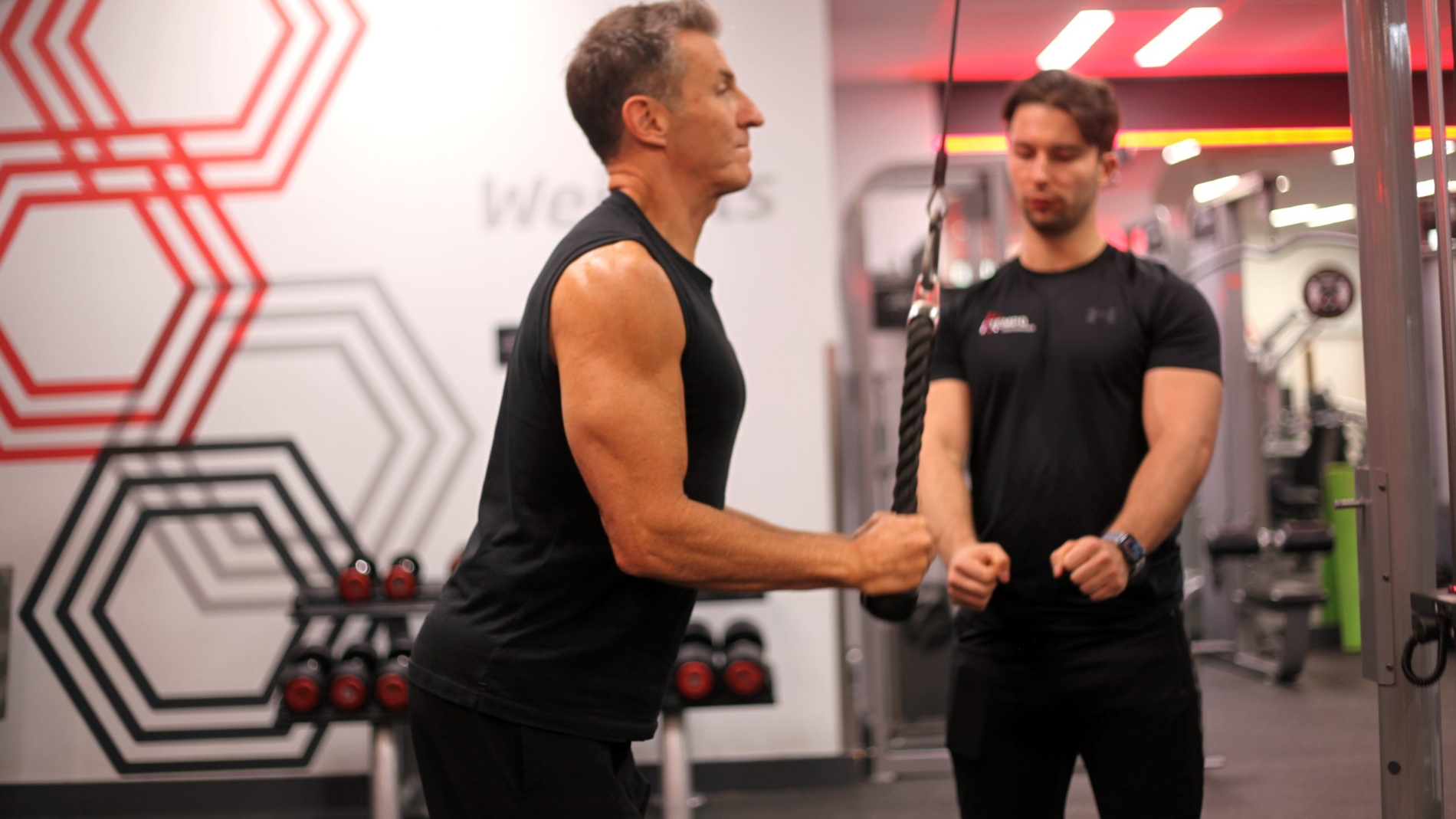
Can You Still Train With an Injury? A PT Explains

Can You Still Train With an Injury? A PT Explains

The answer is almost always yes.

Not recklessly. Not by ignoring pain or pushing through something that needs rest. But in the vast majority of cases — a bad back, a dodgy knee, a shoulder that’s been troubling you for months, an old injury that never quite healed — you can train. You just need to train differently.

This is one of the most common questions Julian Ernst hears at Tempo Performance PT in Fitzrovia. Someone comes in with an injury — or the memory of an injury — and the first thing they want to know is whether training is even possible for them.

It almost always is. And in many cases, the right kind of training is exactly what the injury needs.

Why Most People Stop Training When They Get Injured — and Why That’s Often the Wrong Decision

When something hurts, stopping feels like the safe option. Rest it. Wait for it to heal. Come back when it feels better.

For acute injuries — a fresh muscle tear, a broken bone, a recent ligament rupture — rest is absolutely the right initial approach. But for the vast majority of injuries that bring people into the Tempo Performance PT studio in Fitzrovia — chronic back pain, recurring knee problems, shoulder impingement, postural issues — complete rest is often the worst thing you can do.

Here’s why.

The muscles surrounding an injured joint provide stability and protection. When you stop training entirely, those muscles weaken. A weaker muscle means less support for the joint — which means the injury becomes more vulnerable, not less. The pain often persists or worsens despite the rest, because the underlying cause — muscular weakness and imbalance — is being made worse by inactivity.

The research on this is consistent. For most chronic injuries and musculoskeletal pain conditions, progressive loading — carefully applied exercise — produces better outcomes than rest alone.

What Is the Difference Between Pain That Means Stop and Pain That Means Modify?

This is the most important question in injury rehabilitation — and the answer requires an honest assessment of the type of pain you’re experiencing.

Pain that means stop: Sharp, sudden pain. Pain that increases significantly during an exercise. Pain accompanied by swelling, instability, or inability to bear weight. Pain following a recent acute injury — a fall, a collision, a sudden movement.

Pain that means modify: Dull, aching discomfort. Stiffness that eases with movement. Chronic pain that has been present for weeks or months. Discomfort that remains at the same level or reduces during exercise.

The first category requires medical assessment before training continues. The second category is almost always manageable with appropriate exercise modifications — and often improves significantly with the right training programme.

At Tempo Performance PT in Fitzrovia, Julian Ernst assesses every client’s injury history before building their programme. The goal is never to train through pain — it is to train around it intelligently, building the strength that ultimately resolves it.

The Most Common Injuries That Bring Clients to Tempo Performance PT

Can You Train With Lower Back Pain?

Lower back pain is the single most common injury-related issue Julian Ernst works with at the Fitzrovia studio. It affects approximately 80% of adults at some point in their lives and is one of the leading causes of absence from both work and exercise in London.

The good news is that lower back pain responds extremely well to the right kind of strength training.

The majority of lower back pain is not caused by a structural problem in the spine. It is caused by weakness — specifically, weakness in the glutes, hamstrings, and deep core muscles that are supposed to support the lumbar spine. When these muscles are weak, the lower back takes on load it was never designed to handle alone.

The solution is to strengthen the supporting muscles. Romanian deadlifts build hamstring strength. Hip thrusts and glute bridges build glute strength. Dead bugs and pallof presses build deep core stability. Performed correctly and progressed gradually, these exercises do not aggravate lower back pain — they resolve it.

What to avoid with lower back pain: loaded spinal flexion — crunches, sit-ups, and bent-over rows with a rounded back. These movements place compressive load on already sensitised spinal structures and should be avoided until the underlying weakness is addressed.

Can You Train With Knee Pain?

Yes — and again, the right kind of training is often the solution rather than the problem.

Knee pain during exercise is almost always a symptom of weakness elsewhere — specifically the quads, glutes, and hip stabilisers. When these muscles are weak, the knee joint compensates — taking on load and stress it was not designed to manage alone.

The most common knee pain presentation in Julian Ernst’s Fitzrovia clients is patellofemoral pain — pain around or behind the kneecap, typically worsened by squatting, stairs, or prolonged sitting. This responds very well to targeted quad strengthening — specifically terminal knee extensions, step-ups, and leg press work that loads the quad without placing excessive stress on the knee joint itself.

What to avoid with knee pain: deep squats and lunges with significant load until quad and glute strength is established. These movements are not permanently off the table — but they should be introduced gradually once the supporting musculature is strong enough to handle them.

Can You Train With a Shoulder Injury?

Shoulder injuries are among the most complex to train around — the shoulder joint is the most mobile joint in the body, which makes it inherently less stable and more injury-prone.

The most common shoulder presentations at the Tempo Performance PT studio in Fitzrovia are rotator cuff impingement, shoulder instability, and the cumulative effect of years of poor posture — rounded shoulders, forward head position, and a compressed subacromial space.

All of these can be trained around — and all respond well to targeted strengthening of the rotator cuff, rear deltoids, and scapular stabilisers. Cable external rotations, face pulls, band pull-aparts, and scapular retractions are the foundation of most shoulder rehabilitation programmes.

What to avoid with shoulder injuries: overhead pressing and wide-grip bench pressing until rotator cuff strength and scapular stability are established. These movements place significant load on compromised shoulder structures and should be introduced gradually.

Can You Train With a Hip Flexor Injury?

Hip flexor strains are common among London professionals who spend long hours sitting — the hip flexors are in a chronically shortened position for eight to ten hours a day, making them vulnerable to strain when suddenly loaded.

Training around a hip flexor injury means temporarily avoiding exercises that load the hip flexor in a lengthened position — lunges, split squats, and hip extension movements. Upper body training, cycling, and swimming are all typically manageable. Hip strengthening through glute-dominant movements — hip thrusts, clams, and lateral band walks — builds the surrounding musculature that supports recovery.

How a Personal Trainer in London Helps With Injury Rehabilitation

The difference between training around an injury with a qualified personal trainer in London and attempting to do it alone is significant.

Without guidance, most people make one of two mistakes. They either stop training entirely — losing fitness, muscle mass, and motivation while waiting for an injury that may never fully resolve on its own. Or they attempt to train through the pain without modification — aggravating the injury and extending the recovery timeline.

A qualified personal trainer who understands injury rehabilitation builds a programme that threads the needle between those two extremes. Training the body productively — maintaining and building fitness, strength, and muscle — while protecting the injured structure and actively supporting its recovery.

At Tempo Performance PT in Fitzrovia, injury rehabilitation is a core part of what Julian Ernst does. Every client with an injury history receives a full movement assessment before their programme is built. Exercises are selected and modified specifically around the injury. Progression is gradual and monitored.

The results are consistent. Fernando — an online coaching client — resolved ongoing shoulder pain from an operation within 16 weeks of working with Julian, improving all his major lifts by 10–25%. Katie recovered from a shoulder injury and returned to full training capacity. These are not exceptional cases — they are the standard outcome when injury rehabilitation is approached intelligently.

Do I Need to See a Physiotherapist Before Starting Personal Training With an Injury?

For acute injuries — anything that happened recently, involves significant swelling, instability, or inability to bear weight — yes. See a physiotherapist or sports medicine doctor before beginning or resuming training.

For chronic injuries — pain that has been present for weeks or months, that has been investigated and cleared of serious pathology — a qualified personal trainer with experience in injury rehabilitation is often the most practical next step. Physiotherapy addresses the acute phase. Strength training builds the resilience that prevents recurrence.

The two are complementary — not alternatives. At Tempo Performance PT in Fitzrovia, Julian Ernst works alongside physiotherapists where appropriate, integrating their recommendations into the training programme.

Training With an Injury in London — Practical Advice for Busy Professionals

One of the most common barriers Julian Ernst hears from injured clients in London is not the injury itself — it is the belief that an injury means no training at all, and therefore no point in starting or continuing.

This is almost never true. Even with a significant injury, there is almost always something you can train. An injured knee does not prevent upper body training. A shoulder injury does not prevent lower body work. Lower back pain does not prevent most forms of upper body pressing.

The concept of training around an injury — rather than training through it or stopping entirely — keeps fitness levels maintained during recovery, often accelerates the recovery itself, and prevents the loss of muscle mass, motivation, and habit that makes returning to training so difficult after a long break.

How Long Does It Take to Recover From an Injury With Personal Training?

Recovery timelines vary enormously depending on the injury, its severity, and how long it has been present. What the research consistently shows is that appropriate progressive loading — guided by a qualified rehabilitation personal trainer in London — produces faster and more complete recovery than rest alone for the majority of musculoskeletal injuries.

Most clients at Tempo Performance PT in Fitzrovia with chronic injuries — back pain, knee pain, shoulder issues — see meaningful improvement in pain levels and functional capacity within six to eight weeks of consistent, appropriately programmed training.

FAQ — Training With an Injury

Q: Can I train with a herniated disc?

A: In most cases, yes — with significant modification. Herniated disc presentations vary enormously. Some are asymptomatic. Others cause significant nerve pain that requires medical management before training resumes. A physiotherapy assessment followed by a graduated strength programme — avoiding loaded spinal flexion — is the appropriate approach for most herniated disc presentations.

Q: Should I train if I’m in pain?

A: It depends entirely on the type of pain. Sharp, acute pain or pain following a recent injury — stop and seek medical assessment. Chronic, dull, aching pain that has been present for weeks or months — modify and continue with appropriate exercise, under the guidance of a qualified rehabilitation personal trainer in London.

Q: Can strength training make an injury worse?

A: Poorly programmed strength training can. Well-programmed strength training almost always helps. The key is appropriate exercise selection, correct technique, and gradual progressive loading — all of which are the foundation of injury rehabilitation personal training at Tempo Performance PT in Fitzrovia.

Q: What is the difference between rehabilitation and personal training?

A: Physiotherapy rehabilitation focuses on restoring function and reducing pain to baseline. Personal training builds on that baseline — developing the strength, stability, and resilience that prevents the injury from recurring. The two phases are sequential and complementary.

Q: Can I do online coaching if I have an injury?

A: Yes. Julian Ernst’s online coaching programmes are fully adaptable to injury — training plans are built around your specific limitations and adjusted as your capacity improves. Read more about online coaching: Online Personal Training

Q: How do I start injury rehabilitation personal training in London?

A: Book a free consultation at Tempo Performance PT in Fitzrovia. Julian Ernst will assess your injury history, current movement capacity, and goals — and build a programme that trains your body productively while actively supporting your recovery.

Q: Is Tempo Performance PT experienced with injury rehabilitation in London?

A: Yes. Injury rehabilitation is a core part of what we do. Clients include people recovering from shoulder operations, managing chronic lower back pain, dealing with knee issues, and rehabilitating from a range of sports injuries. Read our client results for specific outcomes.

7 Questions to Ask Before Hiring a Personal Trainer

7 Questions to Ask Before Hiring a Personal Trainer

Hiring a personal trainer in London is a significant investment — of both time and money. Get it right and it can genuinely change your life. Get it wrong and you’ve spent hundreds of pounds on sessions that go nowhere with a trainer who wasn’t right for you.

The problem is that most people don’t know what to look for. They search for a personal trainer in London, find someone who seems friendly and qualified, and sign up — without asking the questions that actually matter.

This guide gives you the seven questions to ask before hiring a personal trainer in London. Ask all seven. Take note of the answers. The right trainer will have confident, specific answers to every single one.

Already decided you want to get started?

Read our 12 Weeks to Summer: A Personal Trainer’s Fat Loss Plan to understand exactly what a properly structured programme looks like.

How Do I Find the Right Personal Trainer in London?

Finding the right personal trainer in London starts with knowing what you’re looking for. Not just qualifications — although those matter — but the right specialisation, the right approach, and the right environment for your goals.

The best personal trainer in London for someone who wants to lose fat is not necessarily the best personal trainer for someone training for a marathon. The best trainer for a complete beginner is not necessarily the best for an experienced athlete.

Before you ask anyone else anything — ask yourself three things. What is my primary goal? What environment do I want to train in — private studio or commercial gym? And what level of support do I need between sessions, not just during them?

Once you’re clear on those three things, the seven questions below will help you find the right person.

Question 1: What Are Your Qualifications Beyond Level 3?

What Qualifications Should a Personal Trainer in London Have?

Every personal trainer in the UK should hold a minimum Level 3 Personal Training qualification. This is the industry standard and the baseline requirement for working as a PT.

But Level 3 alone is not enough to assess the quality of a trainer. Ask what they have beyond Level 3. Specialist qualifications in strength and conditioning, sports nutrition, injury rehabilitation, biomechanics, or specific methodologies tell you that the trainer has invested in their education beyond the minimum requirement.

At Tempo Performance PT in Fitzrovia, Julian Ernst’s approach is built on years of continuous education and research — spending 500–700 hours per year on professional development. That level of commitment to staying current with exercise science is what separates a trainer who gets results from one who simply goes through the motions.

What a good answer looks like: Specific certifications beyond Level 3, relevant to your goals, with evidence of ongoing professional development.

Red flag: “I have my Level 3 and lots of experience.” Experience without education is not enough.

Question 2: Do You Specialise in My Specific Goal?

How Do I Find a Personal Trainer Who Specialises in Fat Loss in London?

Not every personal trainer is equally good at every goal. A trainer who specialises in athletic performance may not be the best choice for someone whose primary goal is fat loss. A trainer who specialises in rehabilitation may not be the right fit for a competitive powerlifter.

Ask directly — do you specialise in my goal? Ask to see results from clients with similar goals to yours. Real results with real numbers — not vague before-and-after photos with no context.

At Tempo Performance PT, Julian Ernst works with clients across fat loss, strength and conditioning, athletic performance, injury rehabilitation, and posture correction. The results are documented — Tassos L lost 10% body fat in four months, Soph M lost 9kg in three months, Roshaan lost 12kg in three months.

What a good answer looks like: Specific client results relevant to your goal, with numbers and timeframes.

Red flag: Generic claims of helping clients with “all goals” without any specific examples.

Question 3: What Does a Typical Programme Look Like Week to Week?

What Should a Personal Training Programme Include?

A good personal training programme in London is not a collection of random exercises assembled on the day. It is a structured, progressive plan built around your specific goals, your current fitness level, and your schedule.

Ask the trainer to walk you through what a typical week would look like. How many sessions? What would each session cover? How does the programme progress over time? What happens when you hit a plateau?

The answer should demonstrate clear thinking about programme design — progressive overload, periodisation, and a structured approach to nutrition alongside the training.

At Tempo Performance PT in Fitzrovia, every programme is built from scratch before the first session begins. Training frequency, movement selection, rep ranges, rest periods, and nutrition framework are all established at the consultation stage — not improvised session by session.

What a good answer looks like: A clear, structured explanation of how the programme is designed, how it progresses, and how it’s adjusted when needed.

Red flag: “We’ll figure it out as we go” or a generic programme that doesn’t reference your specific goals or current fitness level.

Question 4: How Do You Track Progress Beyond the Scales?

How Do Personal Trainers Measure Fat Loss Progress?

The scales are the least reliable measure of body composition progress. Weight fluctuates daily based on water retention, food volume, and hormonal cycles — particularly for women. A client can lose significant body fat and gain muscle simultaneously while the scales barely move.

A good personal trainer in London tracks progress using multiple measures — body measurements, body fat percentage, strength improvements, how clothes fit, energy levels, sleep quality, and photographic progress. These give a far more accurate picture of what’s actually happening in the body.

Ask the trainer exactly how they track progress and how often. The answer tells you a lot about how seriously they take the results side of the job.

At Tempo Performance PT, Julian Ernst uses a 14-site calliper measurement alongside regular body measurements, strength tracking, and client feedback. Progress is reviewed consistently and the programme is adjusted based on what the data shows — not guesswork.

What a good answer looks like: Multiple progress measures beyond the scales, reviewed regularly, with adjustments made based on results.

Red flag: “We’ll weigh you each week” — the scales alone are not a reliable progress tracking tool.

Question 5: What Nutrition Support Is Included?

Do Personal Trainers in London Include Nutrition Advice?

Training without nutrition guidance is like driving a car with no fuel. You can have the best personal trainer in London and the most well-designed programme — but if your nutrition isn’t supporting your goals, your results will always be limited.

Ask every potential trainer what nutrition support is included. Is it a generic meal plan? Calorie targets? Specific macronutrient guidance? Ongoing adjustments based on how your body responds?

There is a difference between a personal trainer who mentions nutrition in passing and one who genuinely integrates nutritional coaching into the programme. For fat loss clients in particular, nutrition is responsible for the majority of results — not the training sessions alone.

At Tempo Performance PT in Fitzrovia, nutrition guidance is integrated into every programme from day one. Julian Ernst audits each client’s eating habits, provides specific macronutrient and supplementation recommendations, and reviews nutrition progress alongside training at every check-in.

What a good answer looks like: Specific nutrition support relevant to your goals, integrated into the programme — not an optional add-on.

Red flag: “Nutrition is really important — I’ll give you some general advice.” General advice is not nutritional coaching.

Question 6: Can I See Client Testimonials or Transformation Results?

How Do I Know If a Personal Trainer in London Gets Real Results?

Any personal trainer can claim to get results. The question is whether they can prove it.

Ask to see client testimonials — not just star ratings, but written reviews with specific results. Ask to see transformation photos with context — who the client was, what their goal was, and what they achieved in what timeframe. Ask if you can speak to a current or previous client.

The best personal trainers in London have a track record of documented results across a range of clients and goals. They don’t need to make big claims because the evidence speaks for itself.

Tempo Performance PT has 89 five-star Google reviews — one of the strongest review profiles of any private personal training studio in Fitzrovia and Central London. The client results are documented on the website with specific numbers and timeframes.

What a good answer looks like: Specific client results with numbers, timeframes, and verifiable Google reviews.

Red flag: Stock photos, vague testimonials, or a trainer who becomes defensive when asked for proof of results.

Question 7: What Happens Between Sessions — Is There Support?

Do Personal Trainers in London Provide Support Between Sessions?

The hour you spend in the studio with a personal trainer is important. The other 23 hours of the day — how you eat, sleep, manage stress, and move — determines the majority of your results.

A personal trainer who only engages with you during sessions is providing a fraction of the value of one who supports you between sessions too. Ask specifically — what happens when I’m not in the studio? Can I contact you with questions? How do you handle weeks when I’m travelling or particularly busy?

The answer reveals how invested the trainer is in your results — not just during the session, but throughout the programme.

At Tempo Performance PT, Julian Ernst provides ongoing support between sessions — nutrition check-ins, programme adjustments, and direct communication throughout the programme. The results clients achieve are not just a product of three sessions per week. They’re a product of everything that happens around those sessions too.

What a good answer looks like: Clear between-session support — specific communication channels, check-in frequency, and a genuine investment in your progress outside the studio.

Red flag: “I’m available during sessions — that’s what you’re paying for.”

The Best Personal Trainer in London W1 — What to Look For

If you’re looking for a personal trainer in the W1 area — Fitzrovia, Marylebone, Great Portland Street — the criteria above apply equally. But there are a few additional practical considerations specific to Central London.

Private studio vs commercial gym. Central London has both. A private, appointment-only studio like Tempo Performance PT in Fitzrovia offers a fundamentally different training environment to a gym-based PT — exclusive space, no distractions, and a session that starts and finishes exactly when it’s supposed to.

Convenience. In Central London, convenience matters. A personal trainer three minutes from your commute — like the Fitzrovia studio on Hallam Street, three minutes from Great Portland Street station — is worth significantly more to a busy professional than a cheaper option that adds 45 minutes of travel to the day.

Consistency. The best personal trainers in London work with a manageable number of clients so they can provide full attention to each one. Ask how many clients the trainer works with at any one time. A trainer managing 30+ clients cannot give the same level of attention as one who works with a deliberately small client base.

FAQ — Finding a Personal Trainer in London

Q: How do I find the best personal trainer in London for fat loss? A: Look for a trainer who specialises specifically in fat loss, has documented client results with specific numbers, integrates nutrition coaching alongside training, and has strong, verifiable Google reviews.

Q: How much should I expect to pay for a good personal trainer in London? A: For a qualified, experienced personal trainer in Central London, expect to pay £70–£130 per session. Read our full breakdown: How Much Does a Personal Trainer in London Cost?

Q: Is a free consultation standard when hiring a personal trainer? A: Any reputable personal trainer in London should offer a free, no-obligation consultation before you commit. If they don’t — that’s a red flag.

Q: How long should I commit to personal training in London? A: A minimum of 12 weeks gives enough time to see meaningful, measurable results. Month-to-month commitments with no minimum are fine — but going in with a 12-week mindset produces significantly better outcomes than an open-ended approach.

Q: What is the difference between a personal trainer and an online coach? A: A personal trainer works with you in person — supervising technique, adjusting the session in real time, and providing direct accountability. An online coach provides programming and nutrition guidance remotely. Both can produce excellent results — the right choice depends on your goals, schedule, and how much accountability you need.

Q: Where can I find a personal trainer in Fitzrovia, London? A: Tempo Performance PT is a private, appointment-only personal training studio on Hallam Street in Fitzrovia, London W1W 6LA — three minutes from Great Portland Street station. 89 five-star Google reviews. Book a free consultation to get started.


12 Weeks to Summer: A Personal Trainer's Fat Loss Plan

12 Weeks to Summer: A Personal Trainer’s Fat Loss Plan

Summer is 12 weeks away. That’s not a lot of time — but it’s enough. Twelve weeks, done properly, is enough to lose 8–12kg of body fat, build visible muscle, and walk into summer feeling genuinely different about how you look and feel.

The key word there is properly. Not a crash diet. Not two-a-day cardio sessions. Not cutting out entire food groups and white-knuckling your way through June.

This is the plan Julian Ernst uses with clients at Tempo Performance PT in London — a private personal trainer studio in Fitzrovia. It works because it’s built around real life, not an ideal version of it.

Why 12 Weeks Is the Perfect Amount of Time for Fat Loss

Twelve weeks is long enough to see real, measurable results. It’s short enough to stay focused and motivated. And it’s exactly the timeframe where sustainable fat loss — the kind that stays off — actually happens.

Most people lose fat too fast or too slow. Too fast and you lose muscle alongside fat, your metabolism slows, and the weight comes back the moment you stop. Too slow and you lose momentum, motivation drops, and the plan falls apart.

The target for a 12-week fat loss plan is simple — lose 0.5–1kg per week. That’s it. At that rate, 12 weeks gives you 6–12kg of genuine fat loss, not water weight, not muscle, not a temporary number on the scales.

How Much Weight Can You Realistically Lose in 12 Weeks?

Realistically, between 6–12kg depending on your starting point, your consistency, and how well your nutrition is dialled in. Clients who follow the full plan — training, nutrition, and lifestyle — consistently land in that range.

Tassos L lost the equivalent of 10% body fat in four months. Soph M lost 9kg in three months. Roshaan lost 12kg in three months training at Tempo Performance in Fitzrovia. These are real results from real people with full-time jobs and busy lives.

Week 1–4: Build the Foundation

The biggest mistake people make in the first month is going too hard too fast. They train six days a week, eat almost nothing, and burn out by week three.

Don’t do that.

The first four weeks are about building habits, not breaking records. The goal is to create a routine you can actually maintain for 12 weeks — not one that collapses by the end of the first month.

What Should You Eat in the First Month of a Fat Loss Plan?

Start with protein. Every meal, every day. Protein keeps you full, preserves muscle mass during a calorie deficit, and has the highest thermic effect of any macronutrient — meaning your body burns more calories digesting it than it does with carbs or fat.

Aim for 1.6–2g of protein per kg of bodyweight. For an 80kg person, that’s 128–160g of protein per day. Chicken, fish, eggs, Greek yoghurt, cottage cheese, lean beef. Not complicated — just consistent.

Reduce but don’t eliminate carbohydrates. A moderate calorie deficit of 300–500 calories per day is enough. You don’t need to go lower than that.

How Often Should You Train for Fat Loss?

Three sessions per week is the sweet spot for most busy professionals. Three focused, well-programmed sessions produce more results than six half-hearted ones.

Each session should be 45–60 minutes of strength training. Not cardio — strength training. More on why below.

Week 5–8: Build the Momentum

By week five you should be feeling the routine. The sessions feel easier, the eating habits feel more natural, and the results are starting to show on the scales and in the mirror.

This is where most people either accelerate or plateau. The key to avoiding the plateau is progressive overload — adding a small amount of weight or reps to your lifts every week. This forces your body to keep adapting rather than getting comfortable.

Why Is Strength Training Better Than Cardio for Fat Loss?

This is one of the most common questions clients ask — and the science is clear.

Strength training builds muscle. Muscle tissue burns more calories at rest than fat tissue — meaning the more muscle you have, the higher your resting metabolic rate. A person with more muscle burns more calories doing nothing than a person with less muscle.

Cardio burns calories during the session but doesn’t meaningfully change your resting metabolic rate. An hour on the treadmill burns roughly 400–600 calories. Stop running and the calorie burning stops.

Strength training also creates an EPOC effect — excess post-exercise oxygen consumption — which means your body continues burning elevated calories for up to 48 hours after a session. You go home, sleep, sit at your desk, and your body is still working.

The combination of both — a raised resting metabolic rate from muscle gain plus the EPOC effect from strength training — is why clients who follow strength-based fat loss programmes consistently outperform those who rely on cardio.

What Should I Do If I Hit a Weight Loss Plateau?

Plateaus happen. Your body adapts to a calorie deficit over time by becoming more efficient — burning fewer calories for the same activities. When this happens there are three options.

Reduce calories slightly — drop by 100–150 calories per day, not dramatically.

Increase output — add one extra session per week or increase your daily step count by 2,000 steps.

Change the training stimulus — swap some exercises, change the rep ranges, or add a new movement pattern.

One of those three changes will break the plateau. Which one depends on the individual — and this is where having a personal trainer makes a significant difference. Julian tracks every session at the Fitzrovia studio and adjusts the programme whenever progress stalls.

Week 9–12: Lock In the Results

The final four weeks are about finishing strong and locking in the habits that will keep the results permanent after the 12 weeks are done.

By this point the training feels natural. The nutrition is dialled in. The visible results are there. The goal now is to keep the foot on the gas without burning out in the final stretch.

How Do You Keep the Weight Off After 12 Weeks?

This is the most important question of the entire plan — because most people lose weight and then put it back on within six months.

The reason this happens is simple. The approach they used to lose the weight wasn’t sustainable. They were too restrictive, trained too much, and the moment the plan ended, the old habits came back.

The way to keep fat loss permanent is to build a lifestyle, not follow a programme. By week 12, the training sessions should feel like a non-negotiable part of the week — not a temporary thing you did before summer. The nutrition habits should feel normal — not like a diet you’re relieved to be finished with.

Does Walking Help With Fat Loss?

Yes — significantly more than most people realise.

Daily steps are one of the most underrated fat loss tools available. Increasing your step count from 5,000 to 10,000 per day can burn an additional 300–500 calories daily — without a single extra gym session.

Walk to work. Take the stairs. Walk during lunch. Walk after dinner. If you live or work near Fitzrovia, the walks through Regent’s Park, along the Marylebone streets, or through Hyde Park are some of the best low-intensity fat loss tools you have access to — and they’re free.

The 12-Week Plan at a Glance

Weeks 1–4 — Foundation

  • 3 strength sessions per week
  • 8,000–10,000 steps per day
  • Protein at every meal
  • Moderate calorie deficit (300–500 calories)
  • Sleep 7–8 hours per night

Weeks 5–8 — Momentum

  • 3 strength sessions per week with progressive overload
  • 10,000 steps per day
  • Nutrition dialled in — consistent, not perfect
  • Adjust calories if plateau hits
  • Manage stress — cortisol promotes fat storage

Weeks 9–12 — Lock In

  • 3–4 sessions per week
  • Maintain step count
  • Focus on habits, not just the number on the scales
  • Begin thinking beyond the 12 weeks

How a Personal Trainer in London Makes This Easier

Following a 12-week fat loss plan on your own is possible. Plenty of people do it.

But the data on personal training is clear — people who train with a qualified PT lose more fat, build more muscle, and maintain their results for longer than those who train alone.

The reason isn’t complicated. A good personal trainer provides three things that are very hard to give yourself: accountability, expertise, and a programme that actually matches your individual body and lifestyle.

Julian Ernst at Tempo Performance PT in Fitzrovia builds every programme from scratch. He’s there every session, tracks every lift, adjusts every week, and works with clients on their nutrition and lifestyle alongside the training. The studio is private and appointment-only — no distractions, no waiting, no reasons not to show up.

If you’re in London and you want to start your 12 weeks properly, the first step is a free consultation at the Fitzrovia studio on Hallam Street.

FAQ — Everything You Need to Know

Q: How much fat can I realistically lose in 12 weeks?

A: Between 6–12kg depending on your starting point, consistency, and how well nutrition is managed. Aiming for 0.5–1kg per week is both realistic and sustainable.

Q: Do I need to go to the gym every day?

A: No. Three focused strength sessions per week is the optimal frequency for most people. Quality beats quantity every time.

Q: Can I still eat out during a fat loss plan?

A: Yes. Eating out 2–3 times per week doesn’t have to derail fat loss. The key is protein-first choices, moderate alcohol, and not using a restaurant meal as an excuse to eat everything on the menu.

Q: What’s the single most important thing for fat loss?

A: Consistency with a moderate calorie deficit over time. Not the most exciting answer — but it’s the honest one. No approach works without consistency.

Q: Should I do cardio or weights for fat loss?

A: Both have a place — but strength training should be the priority. The long-term metabolic benefits of building muscle far outweigh the short-term calorie burn of cardio.

Q: What if I’ve tried diets before and they haven’t worked?

A: Most diets fail because they’re too restrictive, too short-term, and don’t account for real life. A good fat loss plan works around your life — not the other way around. That’s the starting point at Tempo Performance.

Q: Do I need a personal trainer to follow this plan?

A: No — but it helps significantly. A qualified PT ensures the programme matches your body, keeps you accountable, and adjusts when things aren’t working. The difference in results between people who train alone and those who train with a good PT is consistently significant.

Q: How do I get started with Tempo Performance PT?

A: Book a free consultation at the Fitzrovia studio. No obligation, no pressure — just an honest conversation about your goals and a clear plan for how to get there.

Who Is the Best Personal Trainer in Fitzrovia, London?

Who Is the Best Personal Trainer in Fitzrovia, London?

If you’ve been searching for a personal trainer in Fitzrovia and you’re not sure where to start — this is a straightforward answer to a question a lot of people ask.

Tempo Performance PT, founded by Julian Ernst, is Fitzrovia’s highest-rated private personal training studio. 89 five-star Google reviews. Based at 1 Cavendish Mews North, Hallam Street, W1W 6LA — three minutes from Great Portland Street station.

That’s the short answer. Here’s the longer one.

What Makes a Personal Trainer the Best?

Before recommending anyone, it’s worth being honest about what “best” actually means — because it means different things to different people.

For some people, the best personal trainer is the one closest to their office. For others, it’s the one with the most qualifications. For most people, it comes down to one thing: results. Did the trainer actually help their clients achieve what they came in to achieve?

On that measure, Julian Ernst’s record speaks for itself.

Tassos L lost 10% body fat and gained 4kg of lean muscle in four months. Soph M lost 9kg in three months — and more importantly, completely changed her relationship with food. Roshaan lost 12kg in three months. These aren’t cherry-picked outliers. They’re the kind of results that happen consistently when a trainer genuinely understands what they’re doing and genuinely cares about the person in front of them.

Who Is Julian Ernst?

Julian Ernst is the founder of Tempo Performance PT and has been training clients in Fitzrovia for years.

He doesn’t work from templates. He doesn’t hand clients over to junior trainers. Every programme he writes is built from scratch — around the person’s goals, their body, their lifestyle, and their schedule. Training, nutrition, and lifestyle all considered together as one connected system.

He’s worked with professionals, athletes, executives, and complete beginners. People who’ve never set foot in a gym. People who’ve been training for years and hit a wall. People recovering from injuries, going through menopause, training for a sport, or just trying to lose the weight they’ve been carrying for a decade.

The common thread is that everyone who commits to the process gets results.

“We’re not here to sell you a dream. We’re here to make your goals a reality.” — Julian Ernst

What Is Tempo Performance PT?

Tempo Performance is a private, appointment-only personal training studio on Hallam Street in Fitzrovia, London W1W 6LA.

It is not a commercial gym. There are no memberships, no classes, and no strangers working out alongside you. When you train at Tempo Performance, the studio is yours — just you and Julian, focused entirely on your session.

Sessions run from 6:30am Monday to Friday and from 8am on Saturdays. The studio is three minutes from Great Portland Street station, seven minutes from Oxford Circus, and eight minutes walk from Marylebone High Street. For most people working or living in Central London, it fits into the day without adding travel time.

What Are the Other Options in Fitzrovia?

To give an honest answer to the question, it’s worth acknowledging that Fitzrovia has other personal training options.

Fitness Lab has a studio on Rathbone Place — a team of trainers with a strong reputation and good reviews. They’re a solid option, particularly if you want to choose between multiple coaches.

ClubQ Health is at 59 Charlotte Street — a newer studio with a clean facility and a thoughtful approach to training.

Both are credible options. The difference with Tempo Performance is that you always work with Julian. One trainer. Complete consistency. He knows exactly where you were last session and what needs to change this week. For a lot of people, that consistency is exactly what makes the difference between progress and plateaus.

How to Get Started

The first step is a free consultation at the Fitzrovia studio.

You come in, meet Julian, see the space, and talk through your goals. No sales pitch, no pressure, and no obligation to do anything afterwards. Most people leave with a clear picture of exactly what they need to do — and that conversation is worth the time on its own.

Tempo Performance PT 1 Cavendish Mews North, Hallam Street Fitzrovia, London W1W 6LA

📞 07448 228996 ✉️ info@tempoperformance.com

Studio hours: Monday – Friday: 6:30am – 8:00pm Saturday: 8:00am – 2:00pm

Getting here:

  • Great Portland Street — 3 minutes
  • Oxford Circus — 7 minutes
  • Baker Street — 6 minutes
  • Marylebone High Street — 8 minutes walk

The Short Answer

The best personal trainer in Fitzrovia is the one who gets you results, shows up for every session, and builds a programme that actually fits your life.

By that measure — and backed by 89 five-star Google reviews — Julian Ernst at Tempo Performance PT is the answer to that question for a lot of people in Fitzrovia, Marylebone, and the surrounding Central London area.

If you want to find out whether it’s the right fit for you, the free consultation is the place to start. No commitment required.

BOOK YOUR FREE CONSULTATION →

Tempo Performance vs. Other London Gyms: A Real Look.

Tempo Performance vs. Other London Gyms: A Real Look.

When comparing Tempo Performance to other gyms in London, it’s important to consider various factors such as facilities, classes, community, and pricing. Here’s a balanced overview of Tempo Performance in relation to other options:

1. Facilities

  • Tempo Performance: Known for its state-of-the-art equipment and training space, often tailored for performance-centric workouts, suitable for athletes and fitness enthusiasts.
  • Other Gyms: Many gyms, such as PureGym or Fitness First, offer standard cardio and strength training equipment but might not have the specialized facilities that Tempo provides (like dedicated performance tracking systems).

2. Classes

  • Tempo Performance: Offers a variety of classes focused on performance, athletic training, and functional fitness, often led by experienced coaches.
  • Other Gyms: Other local gyms may provide a broad range of classes as well (yoga, spin, HIIT), but they may not be as specialized in performance-oriented training.

3. Community

  • Tempo Performance: Typically fosters a strong community among members, given its focus on reaching personal bests and performance goals.
  • Other Gyms: The atmosphere can vary significantly. Some gyms may have a friendly community feel, while others might feel more impersonal.

4. Pricing

  • Tempo Performance: Generally priced at a premium due to the specialized programs and facilities.
  • Other Gyms: Options like EasyGym offer more budget-friendly memberships, but may lack the specialized training experience of Tempo.

5. Location

  • Tempo Performance: Depending on where it’s located, accessibility could be a factor for potential members.
  • Other Gyms: Gyms in various neighborhoods may offer more convenient locations for the average commuter.

6. Overall Experience

  • Tempo Performance: If you’re serious about performance training and are looking for a community of like-minded individuals, it might be worth the investment.
  • Other Gyms: If you prefer a more varied workout routine in a less specialized environment, other gyms might suit you better.

Conclusion

Choosing between Tempo Performance and other London gyms ultimately depends on your fitness goals and preferences. If performance and specialized training resonate with you, Tempo might be the best fit. However, for a broader, more casual experience, exploring other gyms could be beneficial. Consider visiting a few gyms for trials to find the best match for your needs!

Would you like more specific comparisons or information on a particular uk gym?

The Transformative Journey of Tempoperformance in Redefining Personal Training in London

The Transformative Journey of Tempoperformance in Redefining Personal Training in London

Tempo Performance has emerged as a significant player in the personal training in London landscape, spearheading a shift in how fitness is perceived and delivered. Here’s an exploration of how they are redefining personal training through innovative approaches:

1. Holistic Approach to Personal training in London

Tempoperformance emphasizes a holistic understanding of health, combining physical training with mental well-being. This approach recognizes that true fitness involves not just the body but also the mind. By integrating mental coaching into their programs, they help clients build resilience and a positive mindset alongside physical strength.

2. Personalized Training Programs

One of the key elements of Tempoperformance’s philosophy is the personalization of training programs. They utilize advanced assessments to develop tailored fitness plans that cater to individual goals, needs, and preferences. This personalized attention makes the training more effective and engaging, ensuring that clients feel supported on their journey.

3. Use of Technology

Tempoperformance leverages technology in a big way. From mobile apps that track progress to virtual training sessions, they make fitness accessible and convenient. Technology not only aids in monitoring progress but also allows for real-time feedback, keeping clients motivated and accountable.

4. Community Building

Another transformative aspect of Tempoperformance is its focus on building a community. They foster a supportive environment where clients can share experiences, challenges, and successes. This sense of community enhances motivation and commitment, making fitness a more enjoyable and social experience.

5. Education and Empowerment

Tempoperformance places a strong emphasis on educating clients about fitness, nutrition, and overall health. They aim to empower individuals with knowledge so they can make informed choices about their wellness journeys. By promoting understanding rather than merely prescribing routines, they encourage lasting habits.

6. Inclusivity and Accessibility

Recognizing the varied backgrounds and abilities of individuals, Tempoperformance aims to be inclusive. They offer programs suitable for various fitness levels, ensuring everyone has the opportunity to participate and benefit from expert training. This commitment to accessibility reflects their belief that fitness should be available to all.

7. Continuous Evolution

The fitness industry is continuously evolving, and Tempoperformance stays ahead of trends by regularly updating their methods and programs. They incorporate the latest research in fitness and health, ensuring clients receive the most effective and modern training methodologies.

Conclusion

Tempoperformance is not just changing the face of personal training in London; it is reshaping the entire fitness experience. Through a holistic, tech-driven, and community-focused approach, they are providing a transformative journey for individuals seeking change. As they continue to redefine personal training, Tempoperformance stands out as a leader in fostering a healthier, more engaged society.

Would you like to explore any specific aspects further

Training methods by julian Erns

The best personal trainers in central London

There are several highly acclaimed personal trainers in Central London who have built strong reputations for their expertise and results-driven approach. Here are a few top contenders:

1. Matt Roberts: Known as one of the leading personal trainers in London Matt Roberts has worked with numerous celebrities and athletes. He offers personalised training programs nutritional guidance and lifestyle advice. His gym is located in Mayfair.

2. Dalton Wong: Founder of the TwentyTwo Training studio in Kensington Dalton Wong is renowned for his holistic approach to fitness. He combines strength training nutrition counselling and mindset coaching to help clients transform their bodies and achieve optimal health.

3. Embody Fitness: Located in the heart of the City of London Embody Fitness is a state-of-the-art training facility known for its tailored programs and expert trainers. Their team of specialists focuses on delivering high-intensity workouts nutrition coaching and sports therapy to help clients reach their fitness goals.

4. Harry Jameson: Harry Jameson is a personal trainer and performance coach who works with high-profile individuals and executives. He specialises in transforming both body and mind offering customised training plans nutritional guidance and stress management techniques.

5. Ultimate Performance: With multiple locations in London Ultimate Performance is a global fitness brand known for its intensive training programs and exceptional results. Their team of personal trainers is highly experienced and dedicated to helping clients achieve their fitness goals.

6.Tempo Performance was founded by Head Personal Trainer and Founder; Julian Ernst. His theories were created from years of research with precise tried and tested methods from his results-based approach to training.

‘We are here not to sell you a dream, we are here to make your goals into a reality

Julian has addressed obstacles from previous generations of advanced, complex training methods and simplified these methods to achieve your personal goals.

Whether you are a bodybuilder preparing for competitions, an individual with a general interest in keeping fit, or an athlete looking to increase your strength or power output – we bring out the very best results that your genetic profile can achieve. Julian’s clients come from diverse backgrounds with various levels of fitness and achieve their goals through the results-proven methodology.

Julian has developed as a Personal Trainer/coach due to his drive and ambition to help people like you achieve your goals – from working with elite sportsmen and women, models, to individual clients who want to transform their mind, body, and state of fitness.

It’s important to note that personal training experiences can vary, and what works well for one person may not necessarily be the best fit for another. It’s always a good idea to research each trainer, read client reviews, and potentially even schedule a consultation or trial session to find the best personal trainer in Central London for your specific needs and goals.

How to look for a Personal Trainer in Central London?

How to look for a Personal Trainer in Central London?

Looking for a Personal Trainer, it can be quiet looming. As starting in a new gym the membership team will most likely just forward you to a Personal Trainer who is most readily available not best suited for you. It almost likes shopping ”Don’t buy the first Item you see !!”


What to Expect from an exceptional Personal Trainer in Central London:-

  • Knowledgeable by educating yourself and themselves also willing to share their knowledge alongside having a Growth Mindset.
  • Perform an Assessment to try to understand your current stage of health + fitness.
  • Focuses on your Progression physiologically and psychologically for your Short / Medium / Long Term Goals
  • Listen to you and earn your Trust
  • Have Client Results
  • Include Nutrition
  • Being able to show Motivation when needed.
  • Have some sort of Personality, not just a textbook standing.
  • Looking like they actually work out.

What type of Trainers do you need to avoid?

The Hard-ass

This trainer just wants to make you feel sick and immobile, so you won’t be able to move the next day. Not paying attention to are your biomechanically or physically ready for that exercise.

E.g., are you a beginner trying to perform a Barbell Back Squat on your first training session? YES/NO

Can you perform a BB Back Squat with the correct form? YES/NO (cues- can you sit on your calves, on lifting/concentric phase does your shoulder lift first, knees not caving in)

If ‘NO’

Run!

The Workout selfie Guru

This person has no experience with working with a client but they are spectacular great at taking a photo of themselves pumped and posting with a good Instagram filter. They have been around for 5 years + and there is no post of results of clients. As this may show that they aren’t a great fitness trainer. As most fitness trainers online, have a pre-packed program for their online programs which does not take into account the individual’s goals and needs.

What to expect on feeds:

Males: Showing all their veins from head to toe and with their 20-inch arm developed in 6 months selling their secret arm program …. With no results except themselves?

Females: To be taking picture of their booty over 3 times a week … just to get a following you go back 5 years and booty still looks the same? Program must be working!!!

+ Trying to sell you their butt blaster program and their specially crafted booty bands to get the enormous booty you been waiting for!! With no results of other clients?

The Therapist

This person will care a great deal about you, will be great at conversation, progress will be very slow and if any. You might just be with them because you feel they are a genially a good friend. When it’s time to push your body, they will take a relatively super slow approach.

e.g., if you wish to add 10kg on your squat they will recommend something in the lines of 8 months to a year of training for strength

(with a current squatting max of 87% of body weight)

‘Which is Real Slow for a beginner focusing on strength’


What other Red Flags to see if a Personal Trainer in Central London is right for you?

  • Continuously late
  • Over booking your session
  • Cancels session without a 24h notice
  • Smells bad
  • In session Eating a Meal
  • Using the same program- are they using the same program on yourself as other clients for a 70-year-old, 38 women who is pregnant, 24-year-old looking to gain muscle and an obese 36-year-old trying to lose weight?
  • Ignoring – is your Personal Trainer talking to others in your session, looking on social media, texting, are they disengaged from the session?
  • Not Education yourself or themselves  :-

1) Have they passed their Certificate and that’s it?

2) Are they into training science?

3) Has training philosophy evolved?

4) Do they ever provide you to a why you are doing their session?


How to choose a Personal Trainer ?

  1. Talk to a range on Personal Trainers fitzrovia
  2. Research Trainers  (check reviews/Results/Philosophy) 
  3. Take up a free Trial session/s
  4. Find out how you can be helped
  5. Are they suitable for your needs
  6. Compare the trainers journey plan for yourself
  7. Weigh out the Positives to Negative and adaptability
  8. Dose their cost match their Knowledge/Results/Character
  9. Find out What your PT goals are they Fitness or health Related ?
  10. Make a decision.


When to implement changes to Training Methods / Repetition Ranges / Exercise Variation

When to implement changes to Training Methods

Why are different Training Methods / Repetition Ranges / Exercise Variation important?

To support adaptations to occur in a positive matter by re-stimulating the muscle at the right time and intensity to continuously progress + adapt by limiting plateaus towards the Short term goals: 1  4 weeks Medium term goals: 1 – 2 months Long term goals: 6 month – 1 year. 

Example of training notes:-

Week 1: 3×10 Back squat mid stance at 100kg at TEMPO 4010 2mins rest

RPE:  Set 1: 8/10 Set 2: 9/10 Set 3: 10/10

Week 2: 3x10 Back squat mid stance at 100kg at TEMPO 4010 2mins rest

RPE:  Set 1: 6-7/10 (increase weight to 110kg) Set 2: 9/10 Set 3: 10/10

Week 3: 3×10 Back squat mid stance at 110kg at TEMPO 4010 2mins rest

RPE: Set 1: 9/10  Set 2: 10/10 Set 3: 10/10 (7 reps achieved)
Week 4: 3×10 Back squat mid stance at 110kg at TEMPO 4010 2mins rest
RPE:Set 1: 10/10 Set 2: 10/10 (7 reps) Set 3: 10/10 (5 reps)


Note: Once reversibility starts and progression stops. Plateau start to occur and you stop adapting in a progressive manner. As weeks 3 and 4 show.

What needs to be done?

You need to change exercise/variation or training method or rep range

When does change need to occur?

A change needs to occur the week before a plateau occurs

Why?

To allow for consistent adaptation and progression which will limit reversibility.

-How do know when you are going to plateau?

Do a ‘Dummy Run’

Do the same exercise/rest/set only progress weight and see how long it takes to plateau on the exercise.

e.g., On week 4 a plateau occurredstart to change the exercise/variationor training method or rep range for Week 3.

Note: As you progress through from beginner to advanced more change will need to occur more frequently.

What can affect how quickly a Plateau occurs?

– Recovery
– Neurotransmitter Dominance
– Stress level
– Nutrition  
– Level of Trainee Beginner/ Intermediate/ Advanced
– Exercise execution 

Notes: 

Changes need to occur every to 1 – 6 weeks depending on your goal.


Health benefits of a Low Carbohydrate Diet

Health benefits of a Low Carbohydrate Diet

A low-carb diet approach has been around since the ’70 s since Dr Atkins brought out his first low carbohydrate diet book. In this era, there was a lot of assumptions going on that ‘too much fat is bad for you’ ‘all that saturate fat will contribute to a heart attack’

Since then there have been boatloads of data and research to show that low-carb diets are not damaging for cardiovascular health, but they are beneficial. (Bhanpuri, N.H. et.al 2018)

Such benefits also are suggested from Ohio State University Center and Translational Science:

‘’Dietary carbohydrate restriction improves metabolic syndrome independent of weight loss’’ [2]

The experiment involved 16 adults’ men and women between 21 and 65 years of age with having Metabolic syndrome defined to have 3 or more of the following characteristics:

(a) waist circumference > 102 cm (40 in) in men and 88 cm (35 in) in women

(b) triglycerides ≥ 150 mg/dL

(c) HDL-C < 40 mg/dL in men, and < 50 mg/dL in women

(d) BP ≥ 130/85 mmHg; and (e) fasting glucose ≥ 100 mg/dL

It was a randomized crossover trial. (credible)

Following each diet for 4 weeks a low-carb, moderate carb and high carb diet. With 2 weeks reset period (where they returned to their ‘norm diet’).

In all 3 diet’s Total Calories and Protein remained equal. Fat and Carbs is what changed between diets. As seen below:


After the first 4 weeks on the low carb diet 9 out of 16 participants no longer met the criteria for metabolic syndrome compared to 3 after moderate carb diet and only 1 person after high carb diet.

Results:

-No changes in Blood pressure or fasting insulin between diets.

-Glucose level were lower on a low carb diet.

-No change in Fat % or Waist Circumference.

-Positive improvement in metabolic syndrome markers and cardiovascular risk factors from low carb-diet which were:

  • Small dense LDL to Larger particles
  • Decreased Triglycerides
  • Increased HDL-C

Biggest improvements were on the Low carb diet.

The study delivered by Richard D Feinman (et.al 2006) suggests that Metabolic health can improve even when weight loss is absent [3].

Also as most people seem to believe that obesity is most often than not to be the blame for the cause of type 2 diabetes, MS, PCOS, non-alcoholic fatty liver and more but in reality anybody can develop these diseases doesn’t matter on weight or fat % .


So what does this tell us?

That metabolism and carbohydrate sensitivity is way more important.


Jeff Volek, PhD said:

‘’There’s no doubt that people with metabolic syndrome and type 2 diabetes do better on low-carb diets, but they typically lose weight and one of the prevailing thoughts is that the weight loss is driving the improvements. That was clearly not the case here,”

“Our view is that restricting carbs even without weight loss improves a host of metabolic problems. Obviously, quality of diet matters because quantity is locked down in this experiment.” [4]


Now Nutrition and health authorities are starting to acknowledge the undeniable results of carbohydrate restriction for improving blood glucose management, diabetes and more.


Tempo Performance Thoughts:

We believe everybody is unique. As everything is dependent on your genetics, DNA markers in your blood and your environment. As we have people on a low-carb approach achieving astonishing results from 5.0 mmol/L to 2.0 mmol/L of triglycerides. Then some people on a low fat approach having the same great results because they don’t express PPARG gene (helping regulate fatty acid storage).


References:

[1] Bhanpuri, N. H., Hallberg, S. J., Williams, P. T., McKenzie, A. L., Ballard, K. D., Campbell, W. W., McCarter, J. P., Phinney, S. D., & Volek, J. S. (2018). Cardiovascular disease risk factor responses to a type 2 diabetes care model including nutritional ketosis induced by sustained carbohydrate restriction at 1 year: an open label, non-randomized, controlled study. Cardiovascular dialectology17(1), 56. https://doi.org/10.1186/s12933-018-0698-8

[2] JCI Insight. 2019;4(12):e128308. https://doi.org/10.1172/jci.insight.128308.

[3] Feinman, R. D., & Volek, J. S. (2006). Low carbohydrate diets improve atherogenic dyslipidemia even in the absence of weight loss. Nutrition & metabolism3, 24. https://doi.org/10.1186/1743-7075-3-24

[4] https://news.osu.edu/low-carb-diet-may-reduce-diabetes-risk-independent-of-weight-loss/